Is Cricket Protein Better Than Meat Protein? A Complete Nutritional Comparison
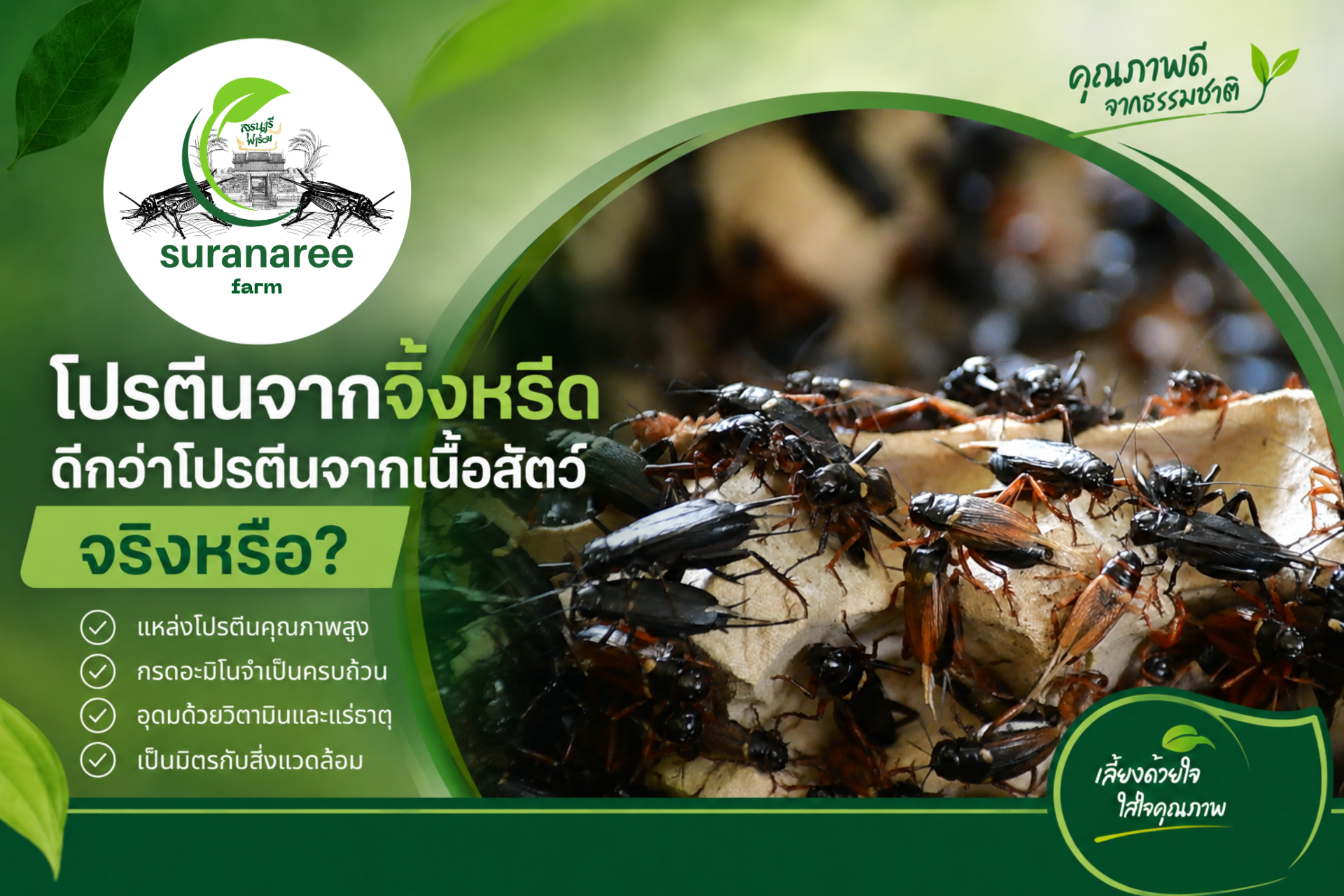
Is Cricket Protein Better Than Meat Protein? A Complete Nutritional Comparison
Why Cricket Protein Is Gaining Global Attention
As the world's population continues to grow, so does the demand for sustainable and nutritious protein sources. In recent years, cricket protein has emerged as one of the most promising alternative proteins, attracting interest from consumers, food manufacturers, and nutrition experts worldwide.
But one question is frequently asked:
Is cricket protein actually better than meat protein?
The answer is not a simple yes or no. Both cricket protein and traditional meat provide high-quality nutrition. However, cricket protein offers several unique advantages, particularly in terms of sustainability, nutritional value, and resource efficiency.
Let's take a closer look.
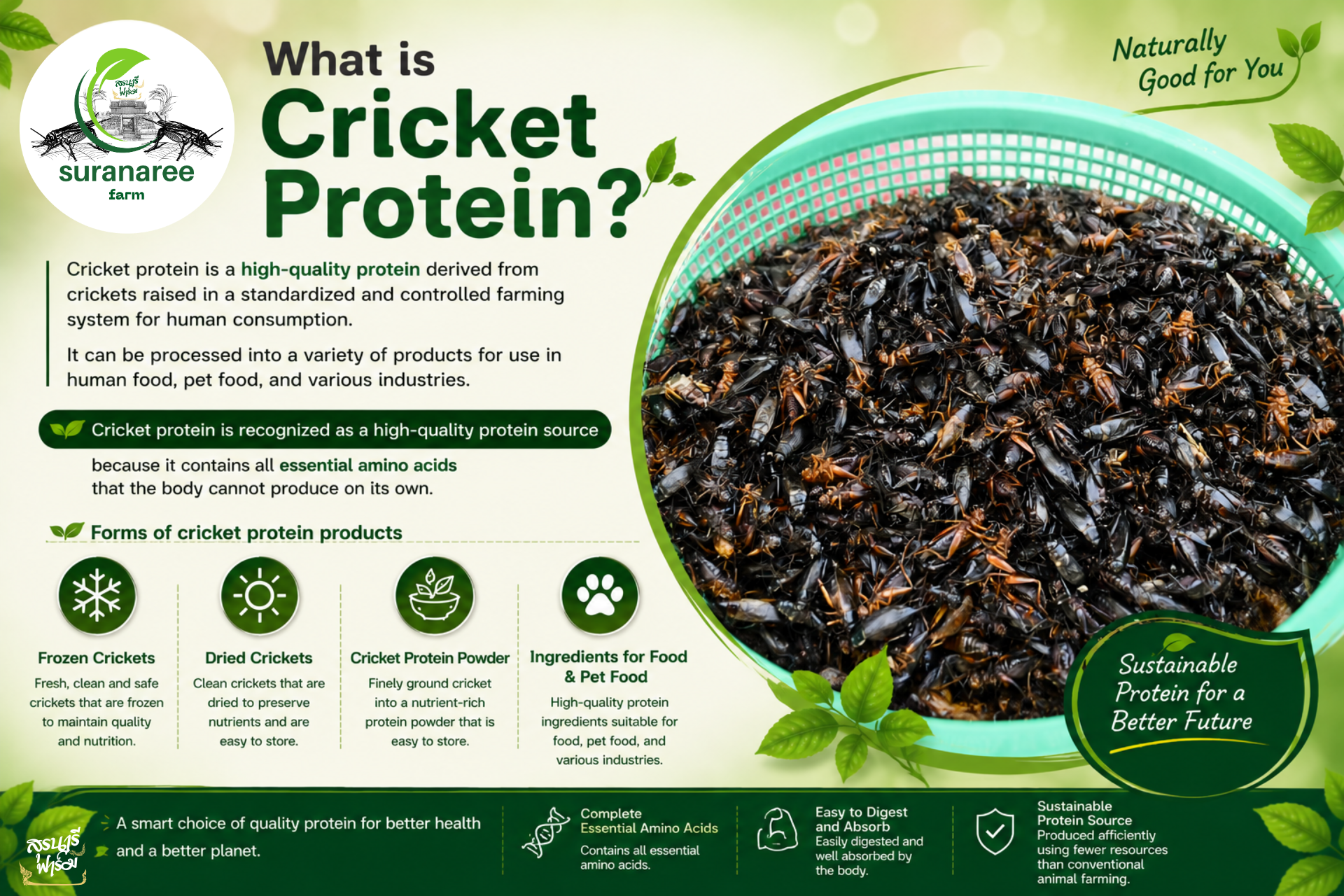
What Is Cricket Protein?
Cricket protein is derived from edible crickets raised under controlled farming conditions for human consumption. Depending on the intended application, crickets can be processed into various products, including:
- Frozen crickets
- Dried whole crickets
- Cricket protein powder
- Ingredients for food and pet food manufacturing
Cricket protein is considered a complete protein, meaning it contains all nine essential amino acids that the human body cannot produce on its own.
Cricket Protein vs. Meat Protein
The table below compares some key nutritional characteristics.
| Feature | Cricket Protein | Meat Protein |
| High-quality protein | ✔ | ✔ |
| Complete amino acid profile | ✔ | ✔ |
| Vitamin B12 | ✔ | ✔ |
| Iron | ✔ | ✔ |
| Zinc | ✔ | ✔ |
| Dietary fiber | ✔ (Chitin) | ✘ |
| Resource-efficient production | ✔ |
Generally lower |
Note: Nutritional values vary depending on species, farming practices, and processing methods.
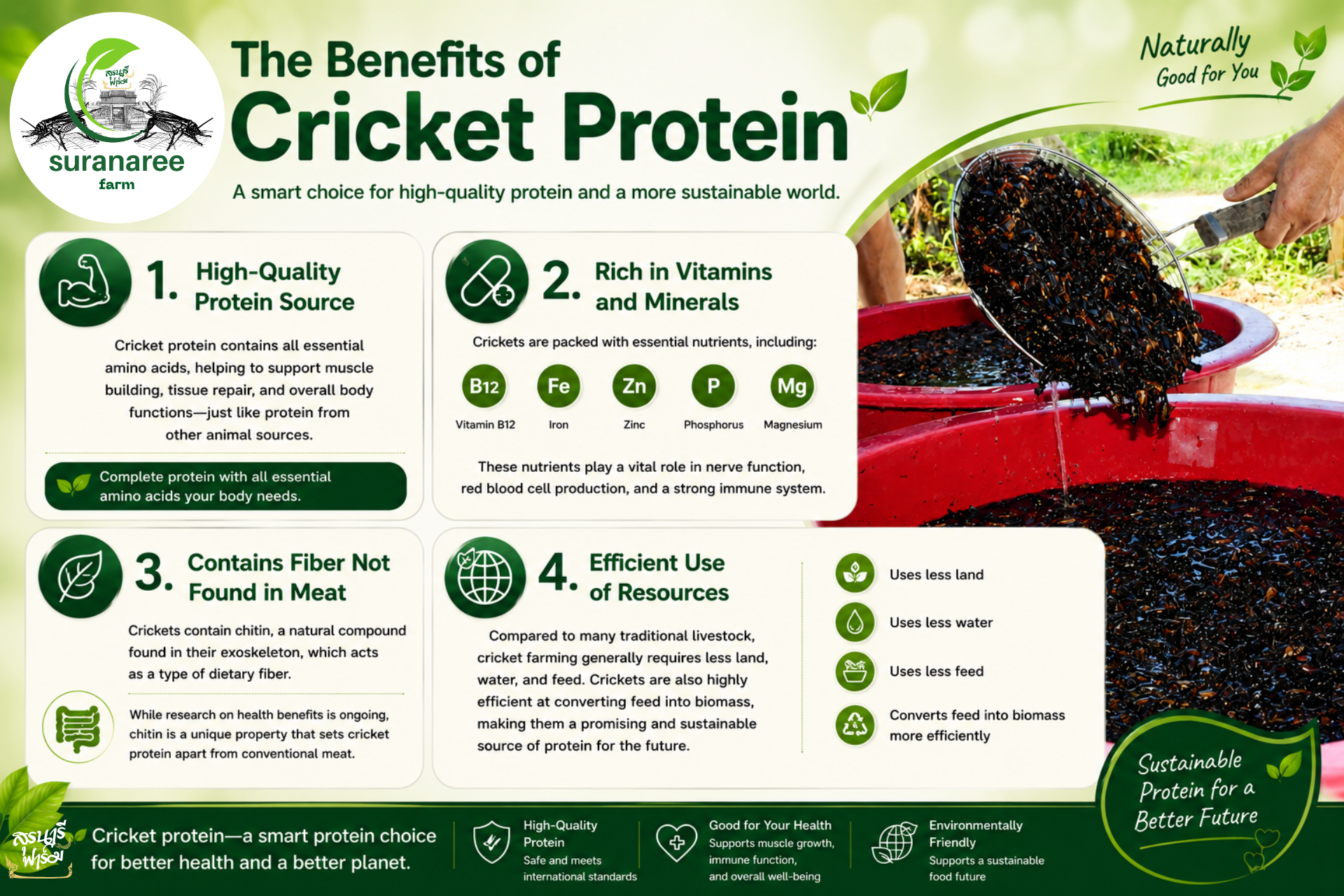
Benefits of Cricket Protein
1. High-Quality Complete Protein
Cricket protein contains all essential amino acids required for muscle growth, tissue repair, and normal body function. This makes it comparable to conventional animal proteins in terms of protein quality.
2. Rich in Essential Nutrients
In addition to protein, crickets naturally contain several important micronutrients, including:
- Vitamin B12
- Iron
- Zinc
- Magnesium
- Phosphorus
These nutrients support energy metabolism, immune function, and red blood cell production.
3. Contains Dietary Fiber
Unlike beef, chicken, or pork, crickets contain chitin, a natural component of the insect exoskeleton.
Chitin functions as a form of dietary fiber. Although research is still ongoing regarding its health benefits, it is one of the characteristics that distinguishes cricket protein from conventional meat.
4. A More Sustainable Protein Source
One of the biggest advantages of cricket farming is its efficient use of natural resources.
Compared with many conventional livestock systems, cricket farming generally requires:
- Less land
- Less water
- Less feed
- Lower greenhouse gas emissions
These characteristics make cricket protein an attractive option for businesses seeking more sustainable food ingredients.
What Are the Advantages of Meat Protein?
Traditional meat remains one of the world's primary protein sources for several reasons:
- Widely accepted by consumers
- Excellent source of complete protein
- Easily accessible
- Available in many forms and products
For this reason, cricket protein should not be viewed as a replacement for meat, but rather as an additional high-quality protein option.
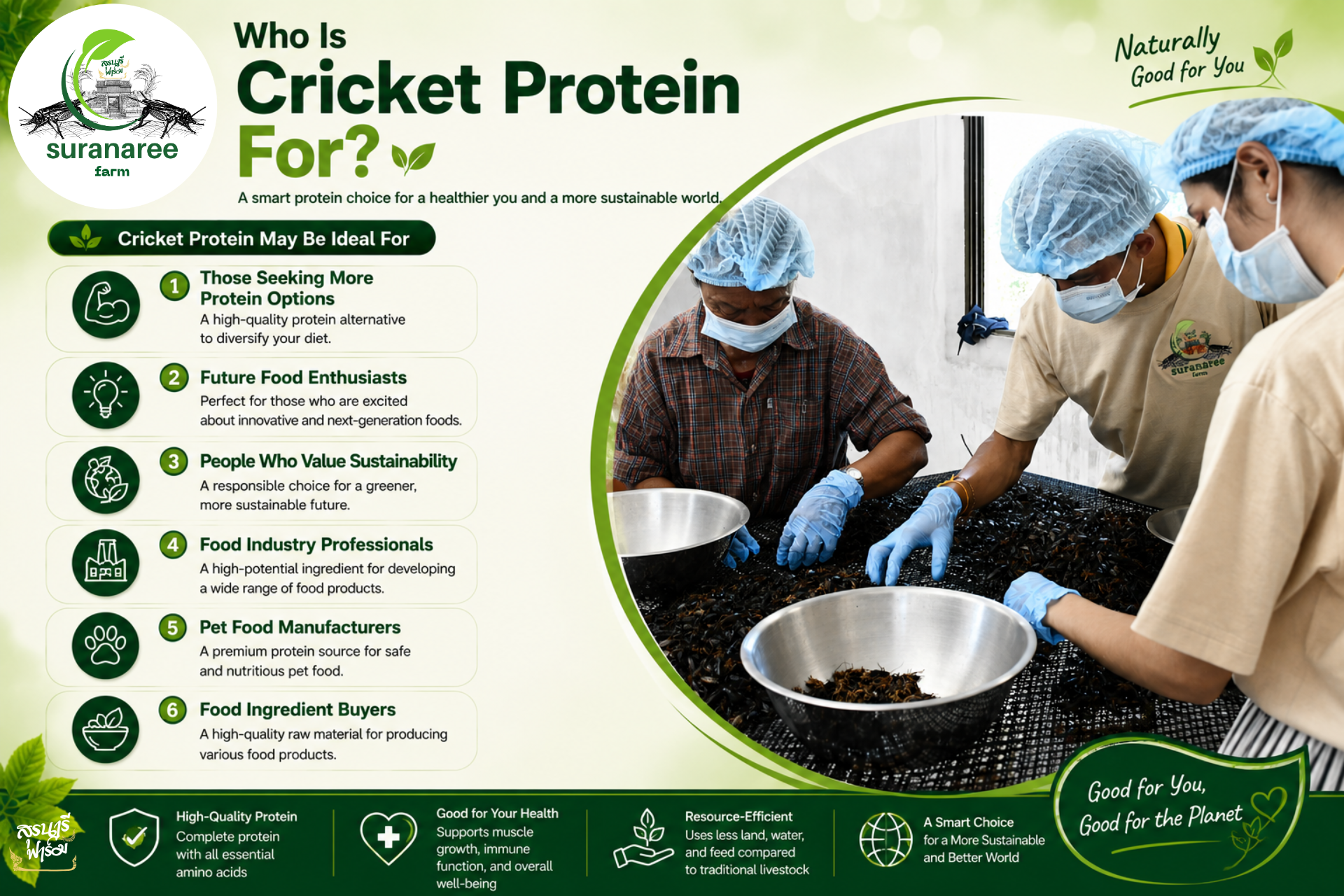
Who Can Benefit from Cricket Protein?
Cricket protein may be suitable for:
- Health-conscious consumers
- People looking for alternative protein sources
- Athletes seeking high-quality protein
- Food manufacturers
- Pet food producers
- Companies developing sustainable food products
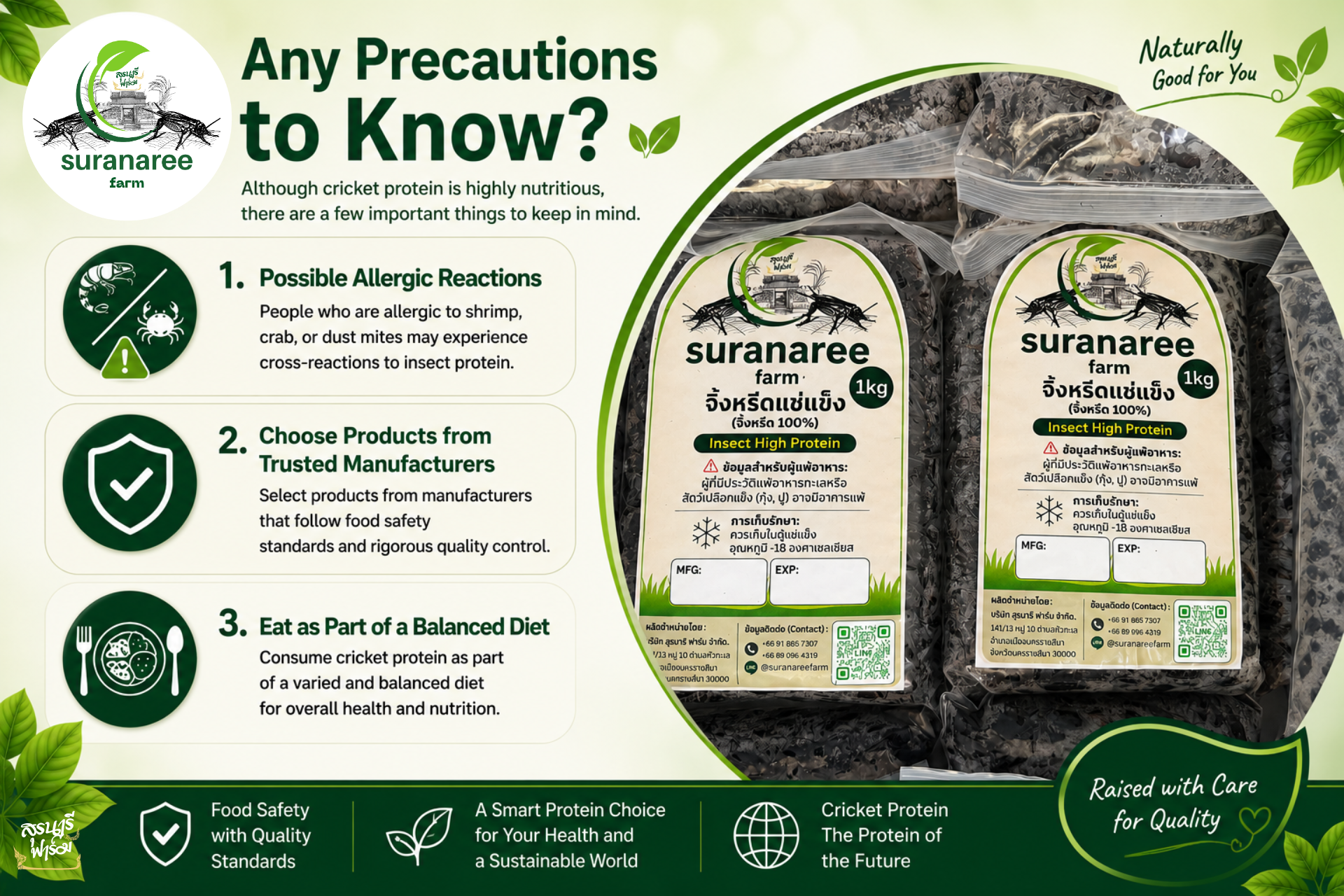
Are There Any Considerations?
Although cricket protein is highly nutritious, there are a few important considerations.
People with allergies to shellfish, such as shrimp or crab, may experience cross-reactivity because insects and crustaceans share similar proteins.
Consumers should also choose products from trusted manufacturers that follow internationally recognized food safety and quality standards.
Final Thoughts
So, is cricket protein better than meat protein?
Not necessarily in every aspect.
Both are excellent sources of complete protein and essential nutrients. However, cricket protein offers additional benefits, including dietary fiber, efficient resource use, and strong sustainability potential.
As global demand for alternative proteins continues to grow, cricket protein is becoming an increasingly valuable ingredient for the food industry and a promising option for consumers seeking nutritious and environmentally responsible choices.
At Suranaree Farm, we are committed to producing high-quality frozen crickets under strict quality control standards, supplying reliable ingredients for food manufacturers and international partners around the world.
Frequently Asked Questions (FAQ)
Is cricket protein a complete protein?
Yes. Cricket protein contains all nine essential amino acids, making it a complete protein.
Does cricket protein contain more protein than beef?
Protein content depends on whether the product is fresh, frozen, dried, or powdered. Direct comparisons should always consider the specific product form.
Is cricket protein environmentally friendly?
Cricket farming generally requires fewer natural resources than many conventional livestock systems, making it a promising option for sustainable food production.
Can people with shellfish allergies eat crickets?
People with shellfish allergies may experience allergic cross-reactivity with edible insects. They should consult a healthcare professional before consuming cricket-based products.